Andrew Rapp
Booker T. Washington and Ida B. Wells
Background
During the Industrial Revolution Era, there was unrest in the south. Blacks had recently been emancipated and were fighting to fit into southern society (Brinkley. 395). In the Supreme Court case, Plessy v. Ferguson, it was ruled that states have the right to pass segregation laws. What followed in the south was intense segregation seen in Jim Crow laws (Brinkley. 395).
Reform Movements
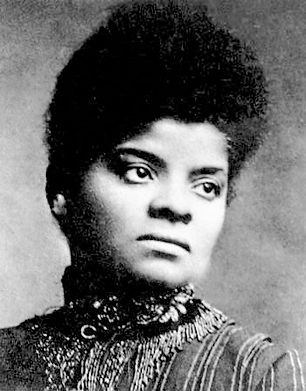
Two reformers, Booker T. Washington and Ida B. Wells, showed the two different sides of black response to white segregation laws. Booker T. Washington, born a slave in Virginia, proposed that blacks should admit they are subordinate to whites but ask for education (Bio.com). Booker's reform idea was called the Atlanta Compromise and received a lot of critique from fellow blacks including W.E.B. Dubois and Ida B. Wells, who said Washington was submitting to white power in hopes of boosting his own (History.com & Brinkley. 395). What Washington did in secret was to fund many segregation court cases so we know now that his plan was to submit to whites then to gain their trust enough for blacks and whites to be equal further down the road. In contrast Ida B. Wells fought against any segregation in particular the practice of lynching (PBS). Wells disagreed with Washington believing it was the blacks' right to be equal and change needed to happen immediately (Bio.com). In response to her condemnation of southern whites, Wells was told not to return to Memphis, Tennessee or else she would be killed (Bio.com).
Outcome
In their lifetime neither of the reformers' ideas were entirely accepted. Some blacks did as Washington said and act subordinate but that truly only made matters worse for them as further laws were made separating blacks and whites further (Americanswhotellthetruth.org). Others fought for equality but the National Government did not support them. The ones who stood up to whites were either killed or scared out of town. The reformers' efforts were successful in addressing ways for future equality but sadly prejudice remained and the National Government did not offer aid to the blacks in the south until many years later after the death of both Wells and Washington.
Citations
Pictures
Background-https://www.mtholyoke.edu/courses/rschwart/ind_rev/images/IR36GR31x1.jpg
Segregation Sign- http://www.pbs.org/wgbh/americanexperience/freedomriders/assets/images/issues/header/jim-crow-laws.jpg
Jim Crow- https://teacher.ocps.net/dennis.cimmino/Images/Jim%20Crow.jpg
Booker T. Washington-https://upload.wikimedia.org/wikipedia/commons/1/1b/Booker_T_Washington_retouched_flattened-crop.jpg
Ida B. Wells-https://ionenewpittsburghcourier.files.wordpress.com/2011/03/whm2ida.jpg
Noose- http://iranpoliticsclub.net/movement/kianoosh-sacred/images/Hanging%20Noose.jpg
Brinkley, Alan. The Unfinished Nation: A Concise History of the American People. Vol. 1. Boston: McGraw-Hill, 2004. Print.
"Booker T. Washington." Bio.com. A&E Networks Television, n.d. Web. 26 Jan. 2016.
"Booker T. Washington." History.com. A&E Television Networks, n.d. Web. 26 Jan. 2016.
"Booker T. Washington." PBS. PBS, n.d. Web. 26 Jan. 2016.
"Ida B. Wells." PBS. PBS, n.d. Web. 26 Jan. 2016.
"Ida B. Wells." Bio.com. A&E Networks Television, n.d. Web. 26 Jan. 2016.
"Ida B. Wells." Ida B. Wells. Americans Who Tell The Truth, n.d. Web. 26 Jan. 2016.